
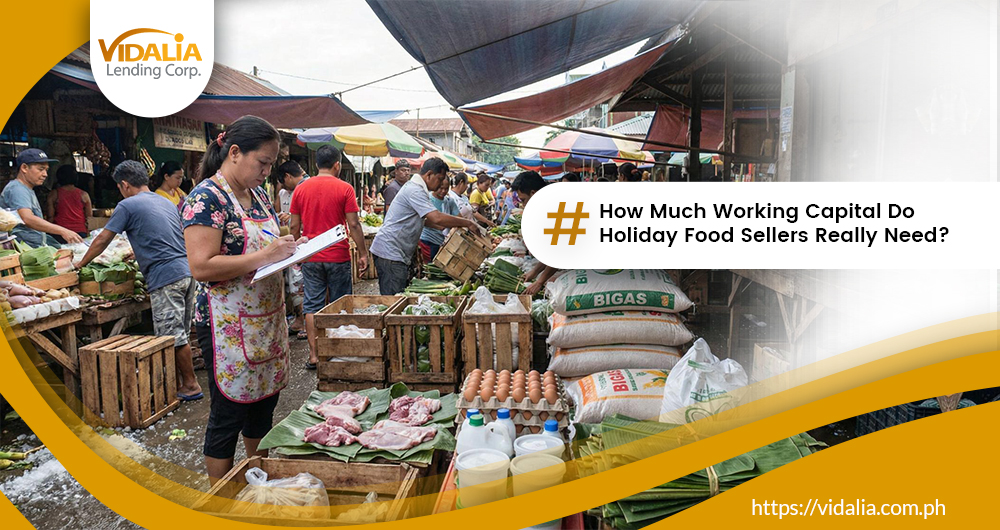
How Much Working Capital Do Holiday Food Sellers Really Need?
During peak seasons like Christmas, New Year, and town fiestas, food businesses spend more before they earn more.
You need cash for:
- Bulk ingredients (meat, rice, coconut milk, sugar, packaging)
- Extra helpers or overtime pay
- Utilities (gas, electricity, water)
- Transport and delivery costs
- Simple marketing or advance orders
Many small food sellers underestimate this and end up borrowing informally or cutting corners. The safer approach is to compute:
What you have now
(cash on hand + inventory + expected collections)
Minus what you must pay soon
(suppliers, helpers, rent, utilities)
Then add a buffer for holiday demand—because the sales money usually comes after the gastos.
Having enough working capital means:
- You don’t turn away customers
- You pay suppliers on time
- You don’t burn out yourself or your staff
- You maximize the season instead of surviving it
Which Business Loan Fits Filipino Food Sellers Best?
Not all loans are the same, and choosing the wrong one can hurt more than help.
1. Working Capital Loans
Best for:
- Buying ingredients in bulk
- Paying helpers during peak weeks
- Covering daily expenses during the rush
These are ideal for seasonal food sellers because they’re designed for short-term needs.
2. Equipment Financing
Best for:
- Ovens, freezers, mixers, sealing machines
- Tools that increase output and consistency
Perfect if your negosyo is growing but your equipment is holding you back.
3. Long-Term or Structured Loans
Best for:
- Bigger expansions
- Permanent kitchen setups
- Long-term growth plans
More suitable for established food businesses with steady income.
Just like how Filipino families plan months ahead for Christmas handa, successful food entrepreneurs plan their financing early—not when orders are already flooding in.
Credit Requirements and Approval Timelines (PH Reality)
Many Filipino food sellers worry about credit—and that’s valid. But options exist.
- Working capital loans may accept lower credit scores or focus more on cash flow.
- Equipment financing often requires moderate credit but ties the loan to the asset.
- Lines of credit usually need stronger credit history but offer flexibility.
- Fast lenders can release funds in days.
- Traditional loans take weeks or months—better for early planners.
The key is honesty and preparation. Know your numbers, your sales pattern, and your peak months.
When Should You Apply for a Holiday Business Loan?
Earlier than you think.
Smart food sellers apply 3–6 months before peak season, especially if:
- You plan to expand your menu
- You expect more bulk orders
- You need new equipment
- You want better loan terms
By September or October, lenders are already busy—and prices are rising. Securing funds early gives you breathing room and bargaining power.
Alternative Funding Options for Food Sellers
When traditional loans aren’t a fit, some food businesses turn to:
- Invoice factoring – convert unpaid receivables into cash
- Flexible payment programs – match repayments to your cash flow
These options work well for food sellers with:
- Regular customers
- Advance orders
- Seasonal income swings
They rely on existing relationships, which many Filipino businesses already have through trust and repeat customers.
Important Notes
For Filipino food entrepreneurs, the holiday season is more than sales—it’s family, tradition, and livelihood.
With the right preparation and financing, the busiest months of the year don’t have to mean stress and utang. They can mean growth, stability, and a stronger negosyo for the years ahead.
Whether you’re preparing lechon for Noche Buena, selling bibingka after Simbang Gabi, or expanding your kakanin business for Christmas orders, having the right funding at the right time makes all the difference.
Holiday opportunities come once a year. With smart planning and the right support, you can meet demand, serve your community, and build a better future for your family—without risking your financial health.